
• Manufacturing Outlook
  • /
  • Rubber and Tire
  • /
  • Top Rubber and Tire Solutions Companies
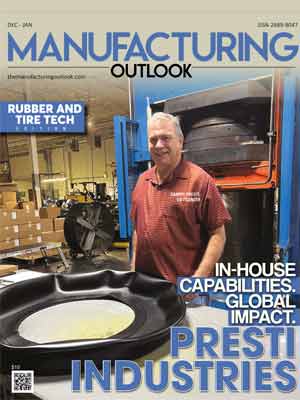
  • Presti Industries: In-House Capabilities. Global Impact.

    Top 10 Rubber and Tire Solutions Companies - 2022

    The manufacturing, design, and performance style of tires are constantly evolving. Essentially, the increasing popularity of electric vehicles (EVs), ongoing supply chain disruptions, and consumer demand for sustainable rubber products, industrial and consumer product manufacturing clichés are transforming the industry. Substantiating this is the launch of the world’s first recyclable silicone self-sealing tire solution, which meets manufacturers’ performance and sustainability demands while providing drivers and passengers with a lightweight, safe, and durable solution. Another fundamental shift is the one driven by the introduction of electric vehicles (EV), which has replaced nitrile rubber with ethylene propylene diene terpolymer (EPDM), silicone, thermoplastic elastomers (TPE), and thermoplastic vulcanizates (TPV). The automotive industry is also noticing a growing consumer demand for eco-friendly rubber materials capable of managing tire rolling resistance. Ultra-high performance (UHP) and low rolling resistance (LRR) tires represent this demand, becoming the fastestgrowing technologies and market segment for tire OEMs.

    Bringing in additional technological innovation is the automation facet that helps tire manufacturers meet global competition and consolidation targets through AI software and ML algorithms. This automation capability can be applied to entire manufacturing plants or specific process equipment like a tire-building machine to markedly improve production efficiencies and minimize delays. Simultaneously, the integration of radio-frequency identification (RFID) chips and sensors in tires is storing critical data and enabling powerful analytics that can support precise programming for autonomous vehicles and facilitate data-driven maintenance processes.

    This Manufacturing Outlook edition presents some promising rubber and tire solutions providers. This issue includes thought leadership articles from Monty Rigsby, Vice President of North America’s truck tire manufacturing operations at Michelin, and Matthew Stockwin, manufacturing director at Coats. The edition also features Presti Industries, a company producing innovative, easy-touse, lightweight, and durable retread envelope solutions.
      Top Rubber and Tire Solutions Companies

      Presti Industries provides innovative enveloping solutions to the retreading industry. Presti is responsible for nine United States patents, including the form fitting inside envelope, a seamless retreading envelope and a rubber wick pad. Development of these products, and others like them, can be traced to the company’s policy of a complete in-house capability that encompasses, product design, R&D, manufacturing and stringent quality control measures. ... read full profile
      Doran Manufacturing
      Doran Manufacturing is a third generation family-owned company focused on creating an extraordinary place to work and have a career, with a mission to create trusted commercial vehicle solutions through service innovation, continuous improvement and vision to be a global leader in safety and maintenance monitoring technology.
      ECO Green Equipment
      ECO Green Equipment designs, engineers, and manufacturers tire recycling equipment for the scrap tire industry and is emerging as a leader in providing cost effective turnkey tire recycling systems. Their focus is to provide custom designed tire recycling systems that deliver optimum production for a variety of applications such as TDS (Tire Derived Shreds), TDA, TDF, rubber mulch, crumb rubber and rubber powder.
      Fulflex
      Fulflex manufactures thin-gauge specialty elastic products catering to the medical, industrial, textile, food, and hygiene markets.The company utilizes natural and synthetic polymers to produce custom-manufactured elastic tapes, and threads which are used in a variety of apparel, enabling clients to manufacture lightweight and durable products that provide customers with comfort, fit, and performance.
      Intralox
      Intralox is the global conveyance solutions leader, offering direct service for a broad range of industries in more than 100 countries. The company specializes in innovative technologies, including Modular Plastic Conveyor Belting, ThermoDrive technology, DirectDrive Spiral Systems and Activated Roller Belt (ARB) equipment.
      Kobelco Stewart Bolling, Inc.
      Kobelco Stewart Bolling, Inc. is a world leader in the manufacture of machinery for the tire, rubber, and plastics industries. Their products include high-efficiency mixers, rotors, Twin Screw Roller (TSR) Head Extruder, and lab equipment. In addition, we rebuild, upgrade, modify, repair, and service our equipment or equipment from any other supplier.
      Pioneer Industrial Systems
      Pioneer Industrial Systems is dedicated to helping manufacturers become more efficient through industrial automation and robotics. The company is a second-generation custom design and build industrial engineering firm based out of Northwest Ohio with over two decades of experience designing, building, programming, and installing industrial automation into their customers’ manufacturing.
      RJS Corporation
      RJS Corporation is a worldwide supplier of supporting equipment to the tire industry. RJS designs, fabricates, and ships its products from its over 50,000 square foot facility in Green, Ohio. Although most often supplying machinery to the tire industry, RJS also develops and manufactures custom new products and productimprovements for industry.
      The Steelastic Company, LLC
      The Steelastic Company, LLC designes and manufactures extrusionbased equipment for tire component production catering to the tire manufacturing industry. The company utilizes calenderless process for extruding, cutting and splicing steel belts for radial tires and offers a complete line of belts, body ply, cap strip and automated apex systems for passenger car, truck and bus, off-the-road and aircraft tire manufacturing, thereby allowing tire makers to profitably manufacture shorter runs of multiple SKUs.
      Wolfe Industrial
      Wolfe Industrial specializes in the design, fabrication and installation of various types of systems, equipment and components required in the production processes of major manufacturers across the USA. This diversity of services gives Wolfe the capability to handle a variety of projects related to material handling, air handling, custom conveyors, structural, piping, and safety protection equipment.

    Rubber and Tire Info

    Q1
    What Do Top Rubber and Tire Companies Do?
    Top Rubber and Tire Companies support manufacturers, fleet operators, industrial buyers, automotive suppliers and distribution partners that depend on reliable rubber components or tire products. Their work may involve tire production, rubber processing, compound development, molded parts, industrial belting, sealing products, testing or supply support. In a manufacturing context, the category is not limited to finished tires. It also includes the materials, production controls, quality checks and logistics discipline needed to keep rubber-based products consistent under heat, pressure, friction and repeated use.
    Q2
    Why Do Rubber and Tire Companies Matter Now?
    Top Rubber and Tire Companies matter because buyers are dealing with tighter performance expectations, material cost pressure and supply risk across transportation, construction, agriculture and industrial production. Tire performance affects fuel use, downtime, safety and replacement cycles, while rubber parts often sit inside machinery where failure can stop a line. Demand is also shaped by electric vehicles, warehouse automation, infrastructure work and sustainability pressure around rubber sourcing, recycling and longer product life.
    Q3
    How Should Manufacturers Evaluate Rubber and Tire Companies?
    Manufacturers should look beyond catalog depth. Strong rubber and tire companies should show disciplined material selection, repeatable production, testing capability, documentation practices and the ability to handle specification changes without quality drift. For tires, buyers may review load ratings, wear behavior, traction, heat resistance and warranty structure. For rubber parts, tolerance control, compound stability, tooling knowledge and batch traceability matter. The most useful providers also communicate clearly about lead times, minimum order quantities, replacement schedules and what happens when demand spikes.
    Q4
    What Business Value Do Top Rubber and Tire Companies Deliver?
    Top Rubber and Tire Companies create value by reducing failure points that are easy to underestimate. A better tire can improve uptime for a fleet or lower replacement frequency in demanding routes. A better rubber seal, hose or molded component can prevent leaks, vibration, contamination or premature machine wear. The gains are often practical rather than dramatic: fewer emergency purchases, cleaner maintenance planning, fewer rejected parts and more predictable production runs. For procurement teams, reliability can be worth more than the lowest unit price.
    Q5
    How Are Innovation and Technology Changing the Rubber and Tire Sector?
    Technology is changing the sector through smarter compounding, sensor-enabled tire monitoring, automated inspection, digital production records and improved recycling methods. Rubber product manufacturers are also working with materials that can better handle heat, chemicals, abrasion or changing environmental standards. Innovation still has to survive factory conditions. A new compound, tread design or production method must prove that it can be produced at scale, inspected consistently and supported after delivery. Practical adoption usually depends on durability, cost control and evidence from use.
    Q6
    What Should Manufacturers Prioritize When Comparing Rubber and Tire Companies?
    Manufacturers comparing Top Rubber and Tire Companies should prioritize product fit, quality discipline, technical support, delivery reliability and lifecycle cost. A provider’s ability to explain trade-offs is important: softer compounds may improve grip but wear faster, while harder materials may last longer but reduce flexibility. Buyers should also review support for compliance, replacement planning, custom specifications and issue resolution. The right choice is usually the company that can meet performance requirements repeatedly, not the one with the broadest claims or lowest first quote.
    Take Me Top